 Optical Wonderful
Camouflage in Animals (Visual Illusion in Nature)
From matching backgrounds to countershaded bodies, animal camouflage works by exploiting the same edge- and pattern-detection shortcuts that make human optical illusions possible.
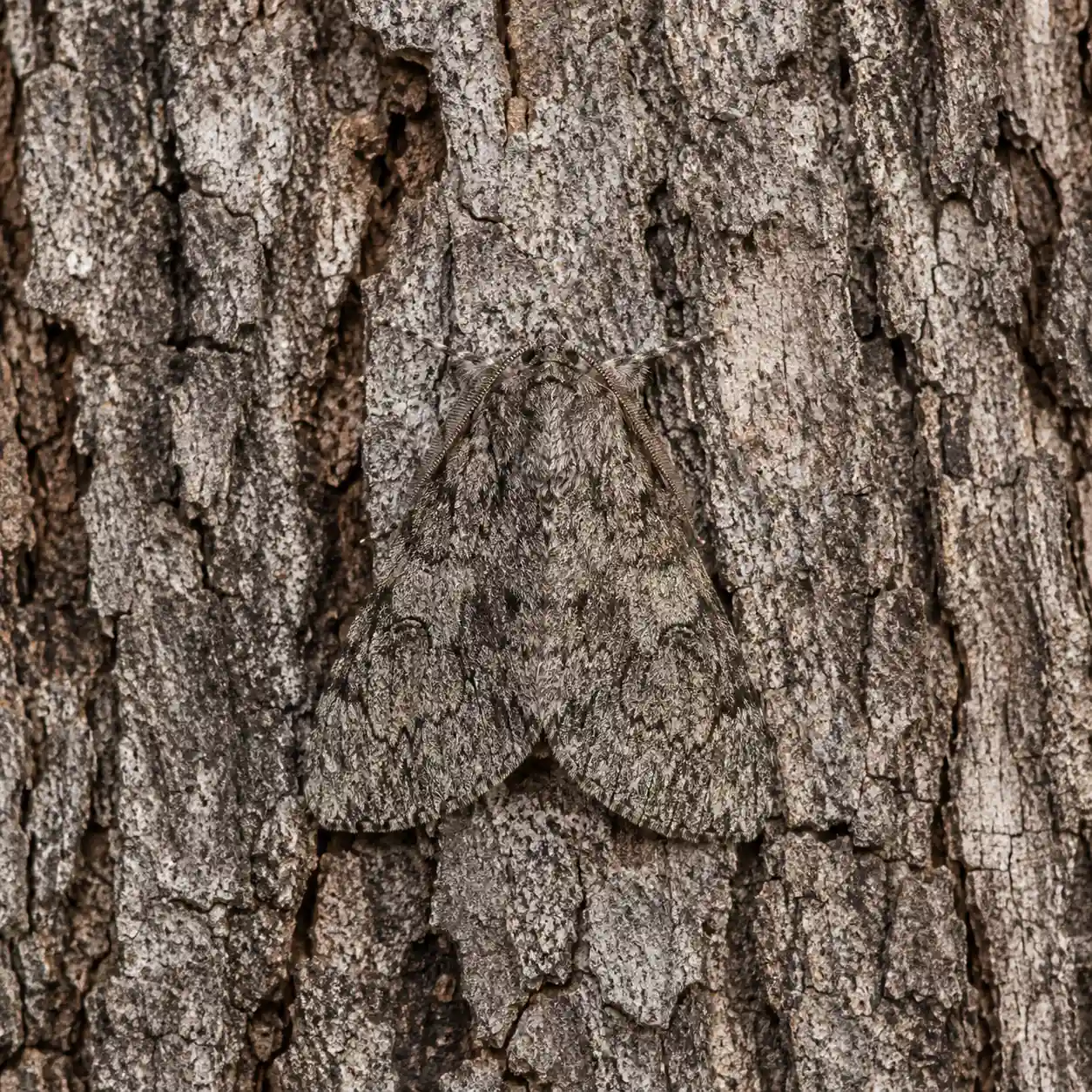
What you're seeing
A leaf insect sits motionless on a branch, its wings veined and edged like real foliage, curled leaf-tips and all. A flatfish presses itself against sand and, within seconds, mottles its skin to match the grain and speckle of the seafloor beneath it. A fawn lies still in dappled forest light, its coat of pale spots breaking its outline into fragments that read as leaf-litter rather than as an animal.
None of these creatures are illusions in the way a Necker cube or a checker shadow is - nothing about them is ambiguous or physically impossible. But they work by exploiting the exact same weaknesses in visual perception that human-focused optical illusions exploit: a visual system built to detect edges, boundaries, and consistent shapes, and camouflage patterns engineered - by evolution rather than by an artist - to defeat that system.
Why it works: the perceptual shortcuts being exploited
Camouflage isn't one trick; it's a small toolkit of strategies that each target a different part of how vision extracts objects from a scene.
Background matching is the simplest: an animal's coloration statistically resembles the colors and textures of its typical surroundings, so there's little contrast difference for an edge-detecting visual system to seize on. Edge detection - finding the boundary where one object's texture or luminance abruptly gives way to another's - is one of the earliest and most fundamental computations any visual system performs, in humans and in the predators and prey being deceived here alike. Background matching starves that computation of the signal it needs.
Disruptive coloration takes a different approach, deliberately placing bold, high-contrast markings across an animal's body in patterns that don't follow its actual outline. Stripes, blotches, and bands that cut across the true silhouette break the animal's shape into visually unrelated fragments, defeating the visual system's tendency to group contours into a single coherent object - the same grouping instinct studied under Gestalt psychology, where the brain automatically tries to complete and unify partial shapes. A zebra's stripes, a moth's mottled wings, and a tiger's disruptive banding all lean on this same trick of feeding the visual system pieces that resist being reassembled into "one thing shaped like a predator."
Countershading, first announced by American painter and naturalist Abbott Handerson Thayer in an 1896 paper and later expanded into his 1909 book Concealing-Coloration in the Animal Kingdom, addresses a subtler cue: light and shadow. Overhead sunlight naturally lights an animal's back more than its underside, creating a gradient that reveals three-dimensional form and makes the animal pop visually from a flat background. Many animals - deer, sharks, penguins, countless birds and fish - are darker on top and lighter underneath, a pigmentation gradient that roughly cancels out the natural lighting gradient and flattens the animal's apparent shape, making it read as less three-dimensional and therefore less object-like against its background. Thayer's insight, controversial when first proposed for its overreach into unrelated claims about art and camouflage, correctly identified countershading as a genuine, widespread anti-predation strategy, and it's now standard material in evolutionary biology.
Whose illusion is it, exactly?
It's worth being precise about what's actually being fooled here. Camouflage isn't an illusion the camouflaged animal experiences - it's an illusion inflicted on the viewer: a predator scanning for prey, or prey scanning for a predator. The visual system being exploited is the observer's, and the "trick" is unusually literal: it isn't a misinterpretation of ambiguous data so much as a genuine reduction of the data available for detection in the first place. In that sense, camouflage sits at the boundary between what we'd normally call an optical illusion and simple sensory concealment - but the underlying perceptual mechanisms being exploited (edge detection, contour grouping, shape-from-shading) are identical to the ones studied throughout the rest of this library.
An evolutionary arms race
Because camouflage strategies work by targeting specific weaknesses in visual processing, and because predators and prey are locked in continuous evolutionary competition, camouflage tends to become more refined over generations wherever visual predation pressure is high - a pattern biologists describe as a coevolutionary arms race. Predator visual systems evolve better pattern-detection and search strategies (search image formation, where a predator that has recently found several prey of one camouflage pattern gets temporarily better at spotting that specific pattern), and prey populations shift toward whatever patterns currently evade detection best, generation after generation.
Related reading
Eyespots and mimicry patterns, covered separately, exploit a different part of a predator's visual system - not concealment, but deliberate misdirection of a predator's gaze and startle response. See mimicry and eyespot patterns for that side of the same evolutionary toolkit.
Read the science behind why this happens →
Related illusions
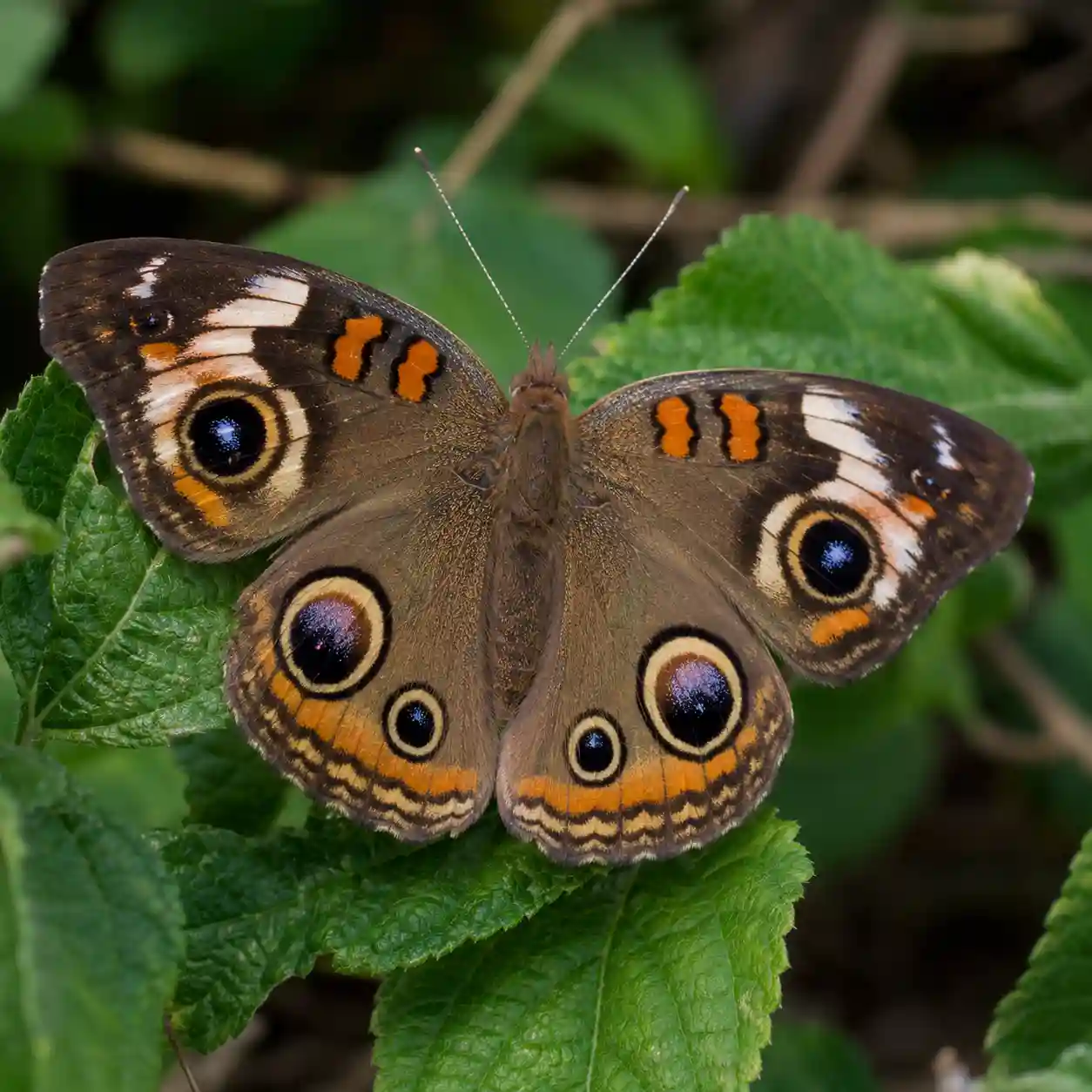 Nature
Mimicry and Eyespot Patterns
Circular markings on butterfly wings, fish fins, and moth bodies exploit a predator's built-in sensitivity to eyes, redirecting an attack toward a survivable body part or scaring it off entirely.
GeometricCafé Wall Illusion
Perfectly straight, perfectly parallel rows of offset light and dark tiles appear to tilt and taper, purely because of a mid-gray mortar line running between them.
Color & ContrastHermann Grid Illusion
A plain grid of black squares on a white background produces faint gray smudges at every intersection - visible only when you're not looking directly at them.