 Optical Wonderful
Mimicry and Eyespot Patterns
Circular markings on butterfly wings, fish fins, and moth bodies exploit a predator's built-in sensitivity to eyes, redirecting an attack toward a survivable body part or scaring it off entirely.
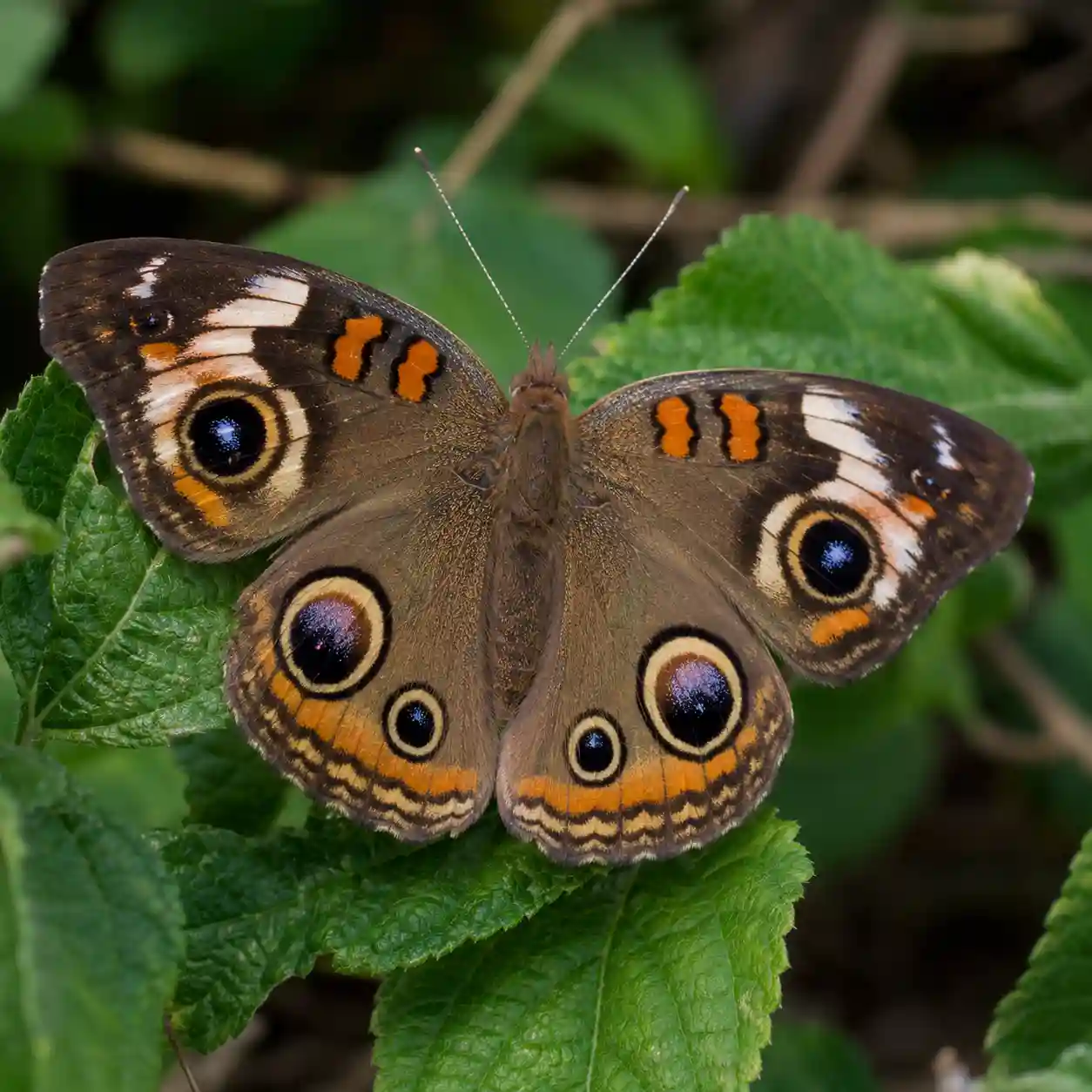
What you're seeing
Flip open the wings of many butterfly and moth species and, instead of camouflage, you find the opposite strategy: a pair (or several pairs) of bold, high-contrast circular markings, often with a dark center ringed by lighter bands, positioned somewhere on the wing far from the insect's actual head. Certain reef fish carry a similar dark spot near the tail combined with a marking near the head that disrupts the appearance of a real eye. Some caterpillars display eyespots so convincing that a startled predator may briefly mistake the front end of an insect for the face of a much larger animal, like a small snake.
These are eyespots, and unlike camouflage, they aren't trying to make the animal disappear. They're trying to actively manipulate where a predator looks and how it reacts, by exploiting the predator's own visual system's sensitivity to eye-like shapes.
Why eye-like shapes work so well as a target
Across a huge range of vertebrate and invertebrate species, visual systems show a strong, largely automatic bias toward detecting eyes and eye-like patterns - a roughly circular dark center surrounded by contrasting rings or bands. This makes evolutionary sense on its own: for animals that hunt, or that need to know whether they're being watched by a predator, rapidly locating another animal's eyes (and therefore its head, its likely direction of attack, and whether it has noticed you) is an enormously useful shortcut. Visual systems tuned to find real eyes quickly and reliably will, as a side effect, also respond strongly to anything else that happens to share that same basic geometry - concentric contrasting circles - even when no actual eye is present.
Eyespots are a direct evolutionary exploit of that bias. A pattern that merely resembles an eye in basic shape and contrast can trigger much of the same attentional capture and, in some cases, the same wariness or startle response, that a genuine eye would. The predator's visual system isn't being tricked into a false belief exactly so much as it's having a fast, low-level detection routine hijacked by a stimulus that satisfies the routine's trigger conditions without belonging to a real threat.
Two different strategies, one shared mechanism
Eyespots are put to work in at least two distinct ways in nature, both riding on the same underlying detection bias.
Startle and deterrence. Some moths and butterflies keep large eyespots hidden while at rest, camouflaged among folded wings, and flash them suddenly when disturbed - a sudden reveal of large, high-contrast circular markings that can startle a would-be predator (particularly small birds) into hesitating or fleeing, buying the insect a critical moment to escape. The effectiveness here likely rests partly on the sudden appearance of eye-like features resembling those of a much larger animal, and partly on the simple element of surprise from a rapid, high-contrast visual change.
Misdirection. A different strategy places smaller, more subdued eyespots away from the vulnerable head, often near a wingtip or tail, sometimes paired with markings that disguise the real head as unremarkable. The logic is one of redirected attack: a predator's strike is more likely to land on the false "head," a body part the animal can often lose and survive - a chunk of wing, a bit of tail fin - while the real head and vital organs stay clear of the strike. Butterflies with wingtip eyespots and torn wing margins consistent with prior, survived attacks are a commonly cited pattern supporting this account, and similar tail-eyespot arrangements appear independently in a number of unrelated fish lineages, which is generally read as a sign this solution has been arrived at repeatedly by separate evolutionary paths rather than inherited from one common ancestor.
An illusion the animal experiences, not the one wearing it
As with camouflage, it's the viewer's perception being exploited, not the eyespot-bearing animal's - a predator's fast, largely reflexive circuitry for detecting eyes and estimating threat direction is what eyespots are built to trigger. That circuitry is doing exactly what it evolved to do; it just has no reliable way to distinguish a genuine eye from a sufficiently convincing geometric stand-in, at least not quickly enough to matter in a life-or-death encounter.
Related reading
Eyespots and camouflage are two branches of the same evolutionary strategy space - deceiving a predator's visual system - approached from opposite directions. See camouflage in animals for the concealment side of that toolkit.
Read the science behind why this happens →
Related illusions
 Nature
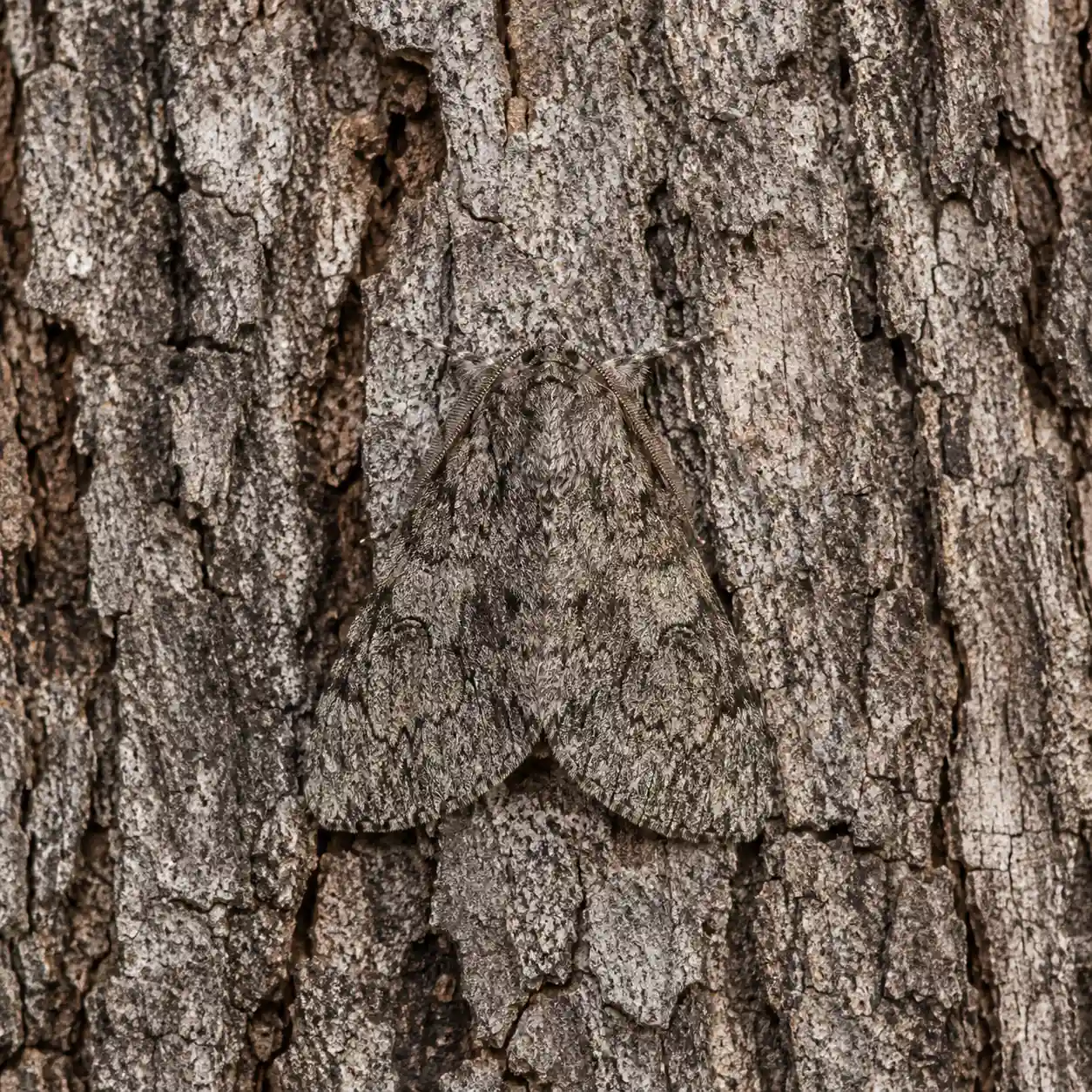
Camouflage in Animals (Visual Illusion in Nature)
From matching backgrounds to countershaded bodies, animal camouflage works by exploiting the same edge- and pattern-detection shortcuts that make human optical illusions possible.
GeometricKanizsa Triangle
Three notched circles, arranged just so, produce a bright white triangle with crisp edges - even though no triangle is actually drawn anywhere in the image.
 Ambiguous
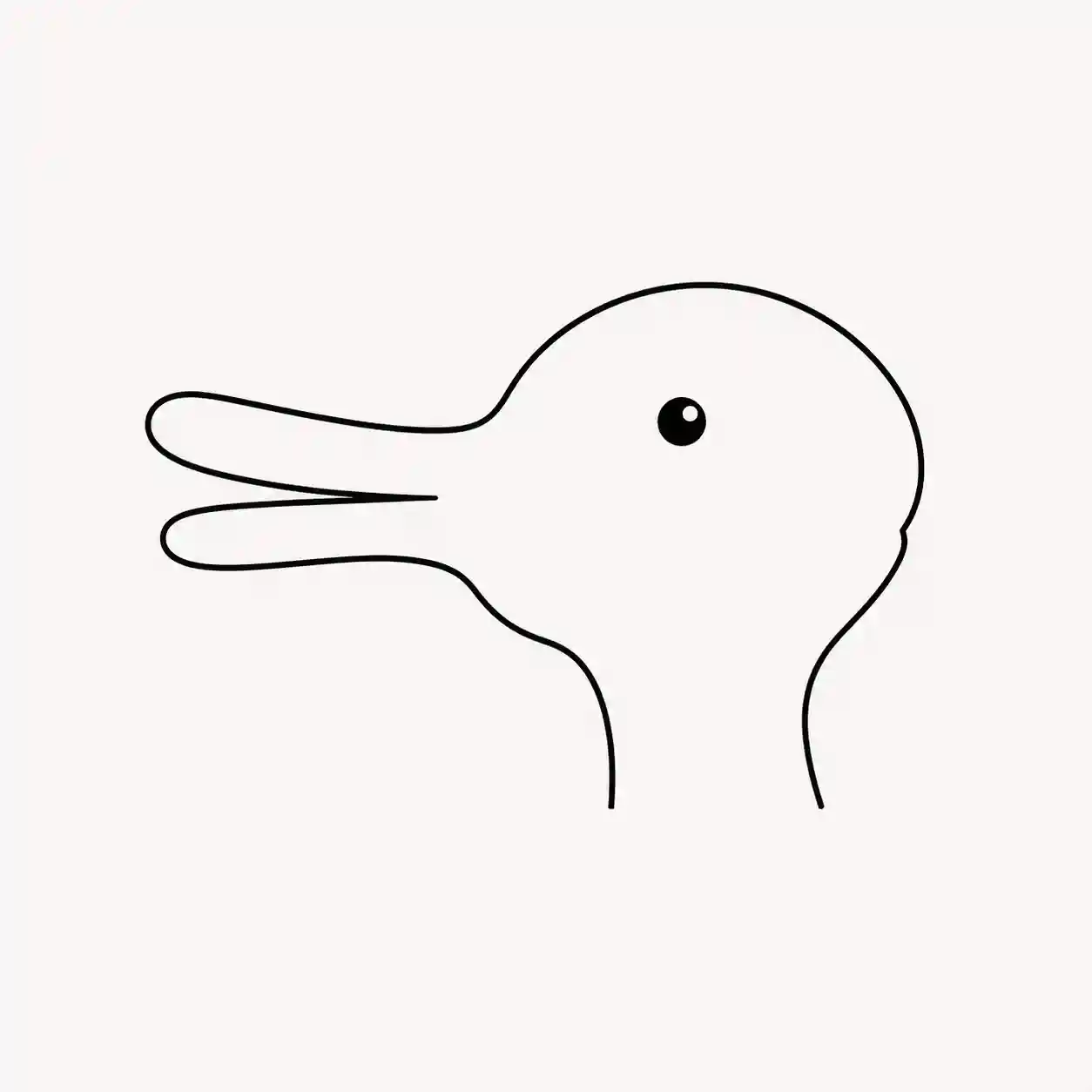
Duck-Rabbit Illusion
A single sketch of two bumps and a line reads as either a duck's bill facing left or a rabbit's ears facing right, and most viewers can't hold both readings at once.