 Optical Wonderful
Forced Perspective (Photography Technique)
A deliberate camera trick that makes objects at different distances look like they're the same size, or vice versa, by carefully aligning them along a single line of sight.
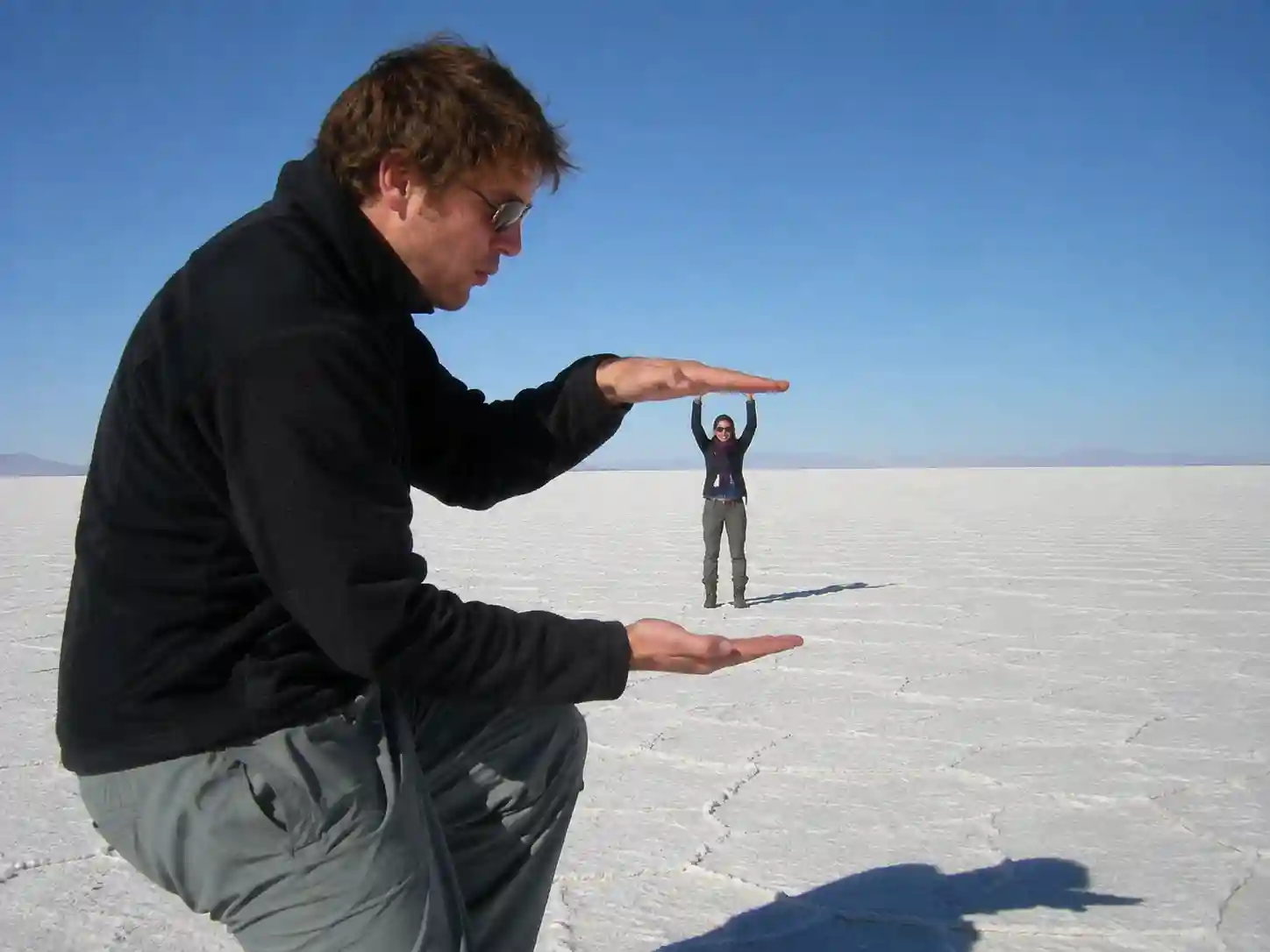
What you're seeing
Forced perspective is a real, deliberately engineered technique, not a naturally occurring visual quirk - a photographer or filmmaker positions objects at very different actual distances from the camera so that, from one specific and carefully chosen vantage point, they appear to be the same distance away and therefore directly comparable in size. A person standing far in the background can be made to look like they're being held in another person's palm in the foreground; a small model building close to the lens can be made to look like a full-size skyscraper far away. Move the camera even slightly off that one precise alignment point and the illusion collapses completely, which is exactly why forced perspective shots require locked-down cameras and painstaking rehearsal to pull off convincingly.
Why your brain accepts the trick
The technique exploits size constancy, the same perceptual shortcut responsible for several other illusions on this site. In ordinary vision, an object's size on your retina shrinks the farther away it is, and your visual system automatically compensates for that shrinkage using distance cues, so a person walking away from you doesn't appear to be shrinking - they appear to be a constant-sized person getting farther away. That compensation depends entirely on your visual system correctly judging relative distance in the first place. Forced perspective works by carefully controlling every visual distance cue available in the frame - the angle of any lines that would normally converge toward a vanishing point, the relative size of any familiar objects, the focus falloff, and even the lighting - so that two objects at wildly different real-world distances present identical, distance-ambiguous cues to the camera. With no reliable way to tell the objects apart in depth, your visual system falls back on its default assumption that things producing the same size cues in the frame are actually the same size, and reads the scene exactly as the filmmaker intended.
Why it's essentially a photographed Ponzo illusion
The underlying logic is a close cousin of the Ponzo illusion, where converging lines make one of two identical bars look larger simply because it sits closer to the point of apparent convergence. Forced perspective does the same thing with real three-dimensional space instead of drawn lines: it uses the natural convergence of a hallway, a road, or any receding scene as the "converging lines," and places genuinely different-sized (or different-distance) real objects along that convergence so their true sizes cancel out the effect a viewer would otherwise expect. Where the Ponzo illusion tricks you with a flat drawing, forced perspective tricks you with an entire staged physical space, but the perceptual exploit underneath - misjudging size based on ambiguous depth cues - is the same one.
The Lord of the Rings example
One of the most famous large-scale uses of forced perspective in filmmaking comes from Peter Jackson's Lord of the Rings trilogy, where hobbit characters needed to appear roughly half the height of human characters throughout hours of footage. Rather than relying purely on visual effects, the production built entire sets in two different scales and used forced perspective camera setups extensively - placing the "hobbit" actor farther from camera and the "human" actor closer, along a carefully matched sightline, sometimes using specially built oversized or undersized furniture and props within the same shot to reinforce the size difference. Actors had to hit precise marks and cameras had to stay locked at a fixed angle for the trick to hold up, and the technique was combined with genuine height-difference casting, camera tricks, and body doubles depending on the shot.
Where else it shows up
Forced perspective is a staple of tourist photography - the classic shot of someone appearing to "hold up" the Leaning Tower of Pisa or "crush" a distant friend's head between two fingers relies on exactly this principle, achievable with nothing more than careful positioning and no special equipment. Architects and garden designers have also used a close relative of the technique - sometimes deliberately narrowing a path or shrinking elements toward the far end - to make a space look longer or shorter than it physically is, a trick that predates photography entirely.
Related reading
For the flat, line-drawing version of the same size-judgment exploit, see the Ponzo illusion; for a case where a physically distorted real room fools depth perception rather than a camera fooling distance perception, see the Ames room illusion.
Read the science behind why this happens →
Related illusions
Ponzo Illusion
Two identical bars look like different lengths when placed across a pair of converging lines, because the brain reads the converging lines as a hint about distance.
 Size & Perspective
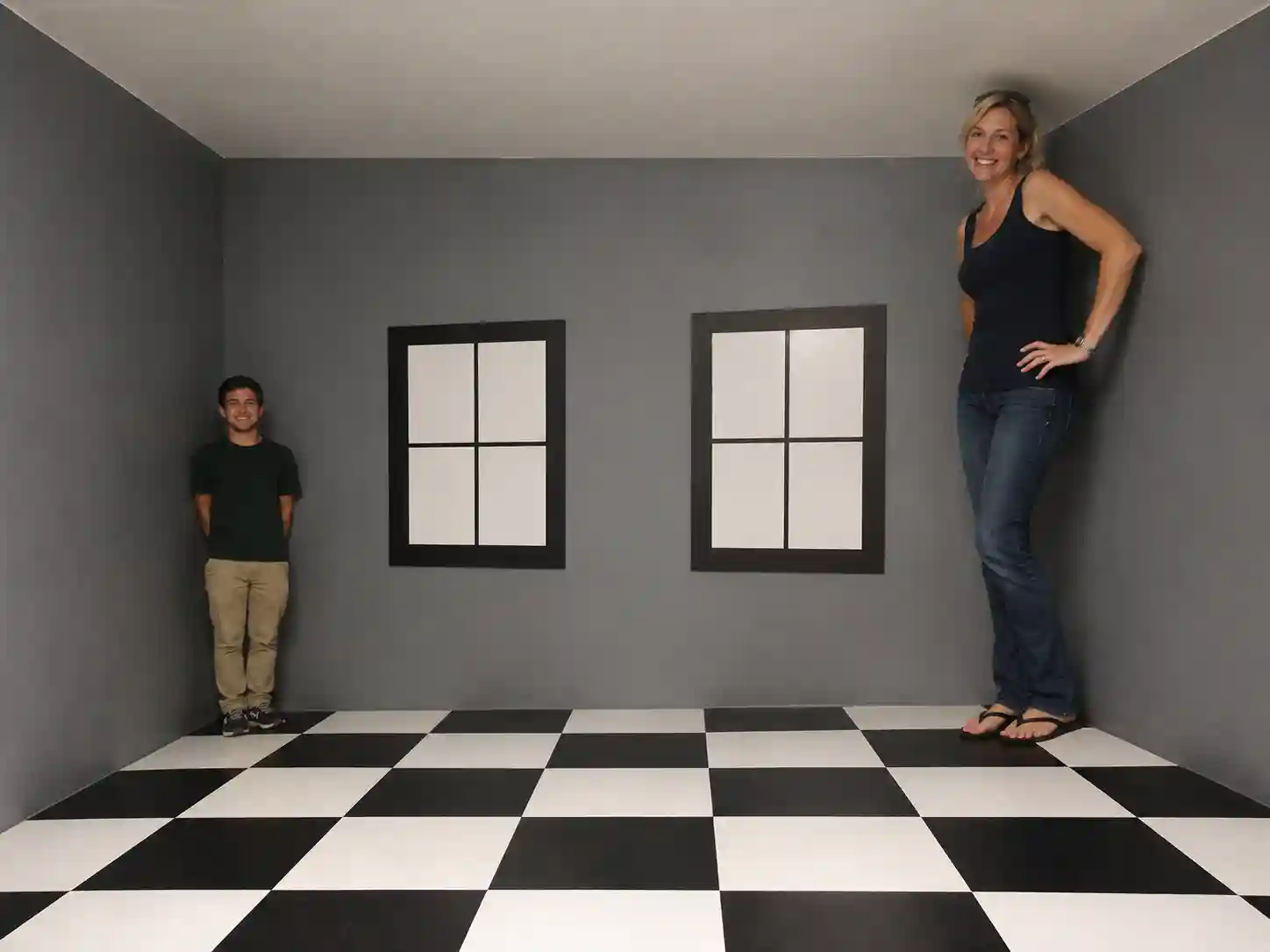
Ames Room Illusion
A distorted, trapezoidal room that looks perfectly rectangular from one exact viewing point, making people standing in opposite corners appear to shrink or grow to impossible sizes.
 Size & Perspective
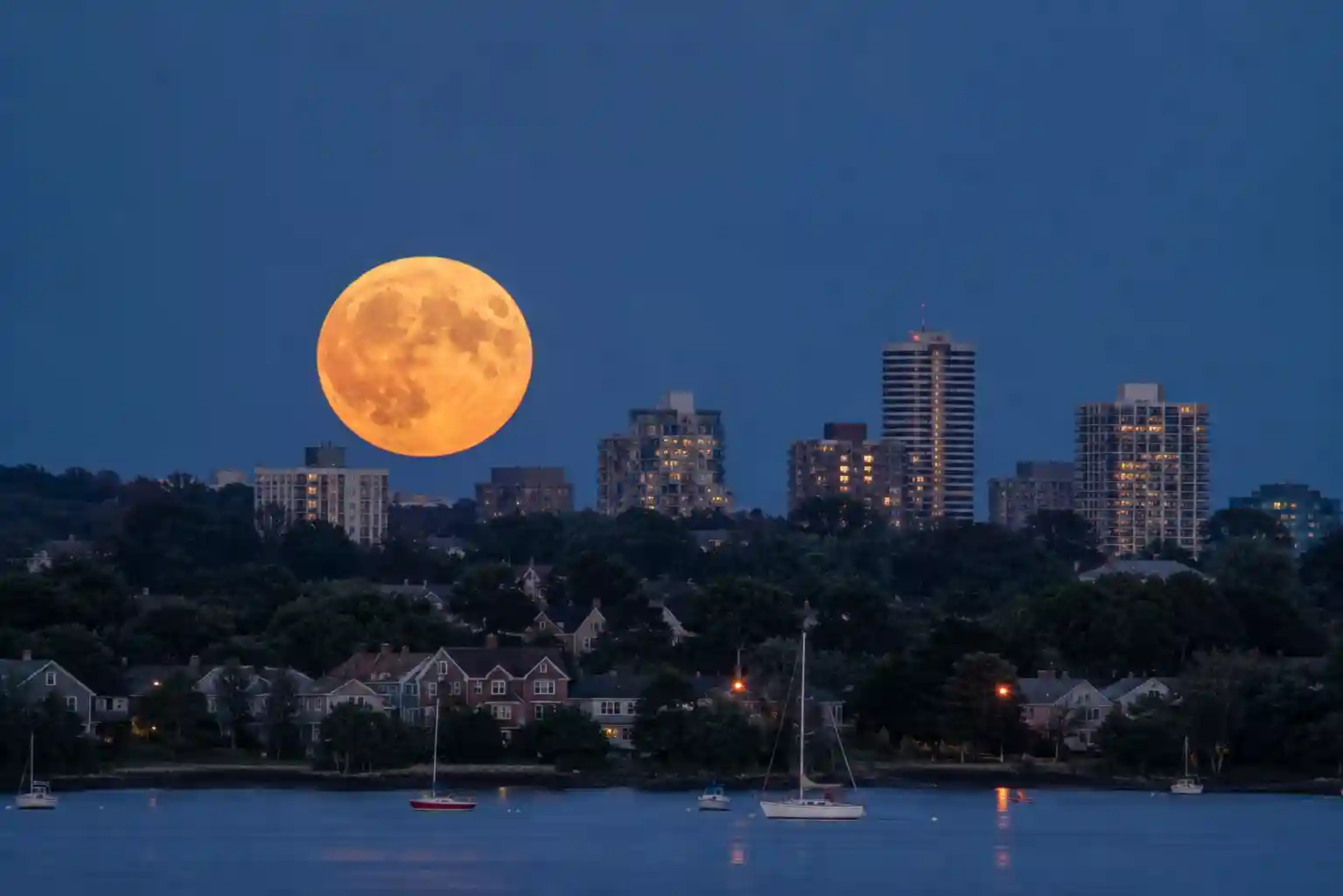
Moon Illusion (Why the Moon Looks Bigger at the Horizon)
A full moon low on the horizon looks dramatically larger than the same moon high overhead, even though it casts an identical, measurable size on your retina in both positions.