 Optical Wonderful
Rubin's Vase (Face/Vase Illusion)
A single black-and-white silhouette that reads either as a vase or as two faces in profile, depending entirely on which region your brain currently treats as the object.
What you're seeing
A symmetrical silhouette, split down the middle by a shape that curves in and out along its edges. Look at it one way and you see a vase (or a goblet, or a candlestick, depending on the exact version) sitting in the center against a plain background. Look at it a different way, and the black region flips to being the background, while the two white shapes on either side resolve into a pair of faces in profile, looking at each other nose to nose across the space where the vase's outline used to be.
The remarkable part isn't that two interpretations exist - plenty of images are ambiguous in some loose sense - it's that they're genuinely mutually exclusive at any given instant. You cannot hold both readings in mind at once. The exact same boundary line is doing double duty, simultaneously serving as "the edge of the vase" and "the edge of the faces," and your visual system insists on picking a side: one region is figure (the object you're looking at), the other is ground (empty background behind it), and which region gets which label is precisely the thing that flips.
Why it happens
This is the textbook demonstration of what Gestalt psychologists call figure-ground organization - the very first move your visual system has to make on any scene before it can do anything else with it. Before your brain can identify, categorize, or reason about an object, it first has to decide which parts of the retinal image belong to "things" and which parts are the empty space those things sit in. Normally this happens so fast and so reliably that you never notice it happening at all: a coffee mug on a desk is unambiguously the figure, the desk is unambiguously the ground, and there's no contest.
Rubin's vase is constructed specifically so that the contest can't be settled. The boundary between black and white regions is exactly as good a fit for "vase outline against a plain background" as it is for "two profiles facing each other against a dark background" - same curve, two equally valid stories about which side is which. With no other cue available to break the tie (no shading, no occlusion, no depth information), your visual system does what it always does with genuinely tied evidence: it commits to one reading, holds it, and after a few seconds - as attention or fatigue shifts the balance - flips to the other, the same reversal dynamic you get in the Necker cube.
What decides which one you see first
Because context and expectation shape figure-ground assignment, it's possible to bias which reading someone sees first - showing a face-heavy context beforehand, or making the "vase" region unusually narrow and vase-like, nudges perception toward one interpretation before ambiguity even sets in. This sensitivity to priming is part of why Rubin's vase and its relatives have stayed useful research tools well beyond their original novelty: they let researchers study how prior expectation and immediate visual evidence get weighed against each other in real time, since the raw image itself never changes.
A little history
Danish psychologist Edgar Rubin introduced the figure around 1915 as part of his doctoral work on the perception of figures, formalizing figure-ground organization as a distinct problem for the first time - earlier writers had certainly noticed that images could be read two ways, but Rubin's work turned it into a rigorous, testable phenomenon. It predates the formal Gestalt school's most famous publications by several years and is now considered one of the founding demonstrations that Gestalt psychology built on. The vase-or-faces silhouette itself has been redrawn countless times since, in versions ranging from ornate Victorian goblets to minimalist modern outlines, but the underlying figure-ground mechanism Rubin identified hasn't needed updating.
Related reading
Rubin's vase belongs to the same family of reversible figures as the duck-rabbit illusion and the "my wife and my mother-in-law" illusion, both of which flip between two readings of an unchanging image. The Necker cube shows the same involuntary-reversal dynamic applied to 3D depth instead of 2D figure-ground assignment.
Read the science behind why this happens →
Related illusions
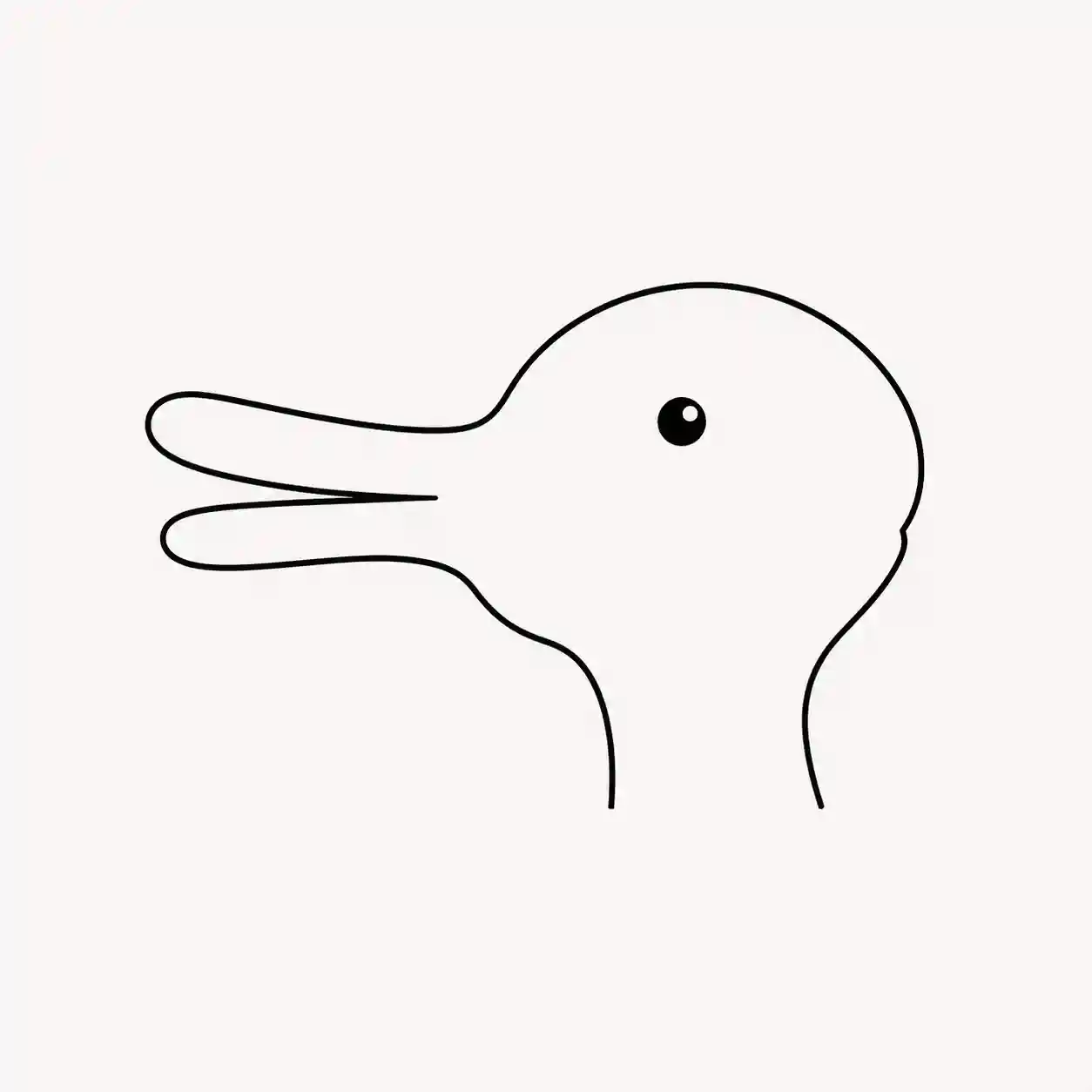 Ambiguous
Duck-Rabbit Illusion
A single sketch of two bumps and a line reads as either a duck's bill facing left or a rabbit's ears facing right, and most viewers can't hold both readings at once.
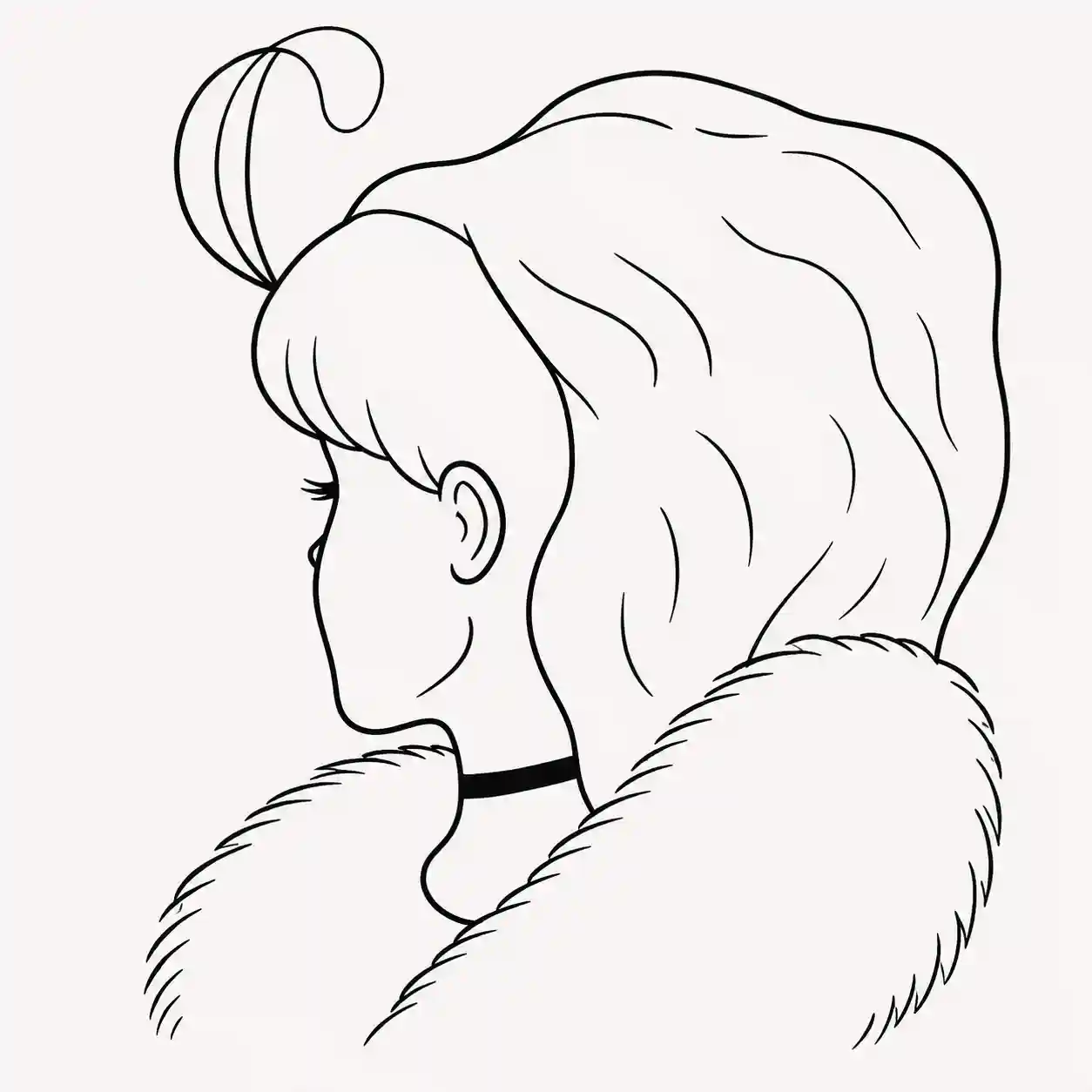 Ambiguous
My Wife and My Mother-in-Law (Old/Young Woman Illusion)
A single portrait sketch reads either as a young woman looking away or an elderly woman in profile, with the same curved line serving as a jawline in one reading and a nose in the other.
AmbiguousNecker Cube
A simple wireframe cube with no shading or perspective cues, which your brain reads as three-dimensional in two different - and equally valid - ways.