 Optical Wonderful
Hollow Face Illusion
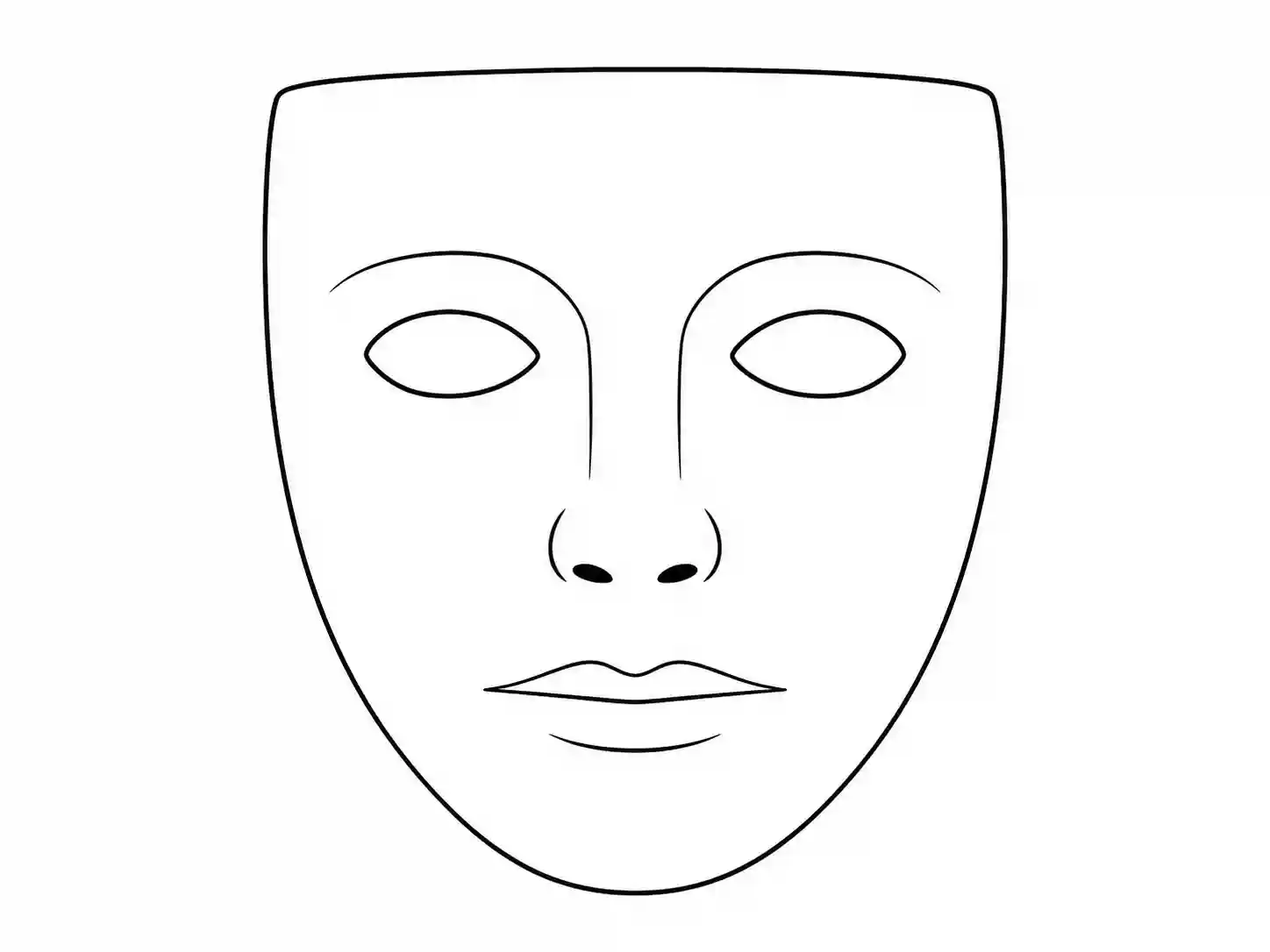
A mask or model of a face, viewed from the concave (inside-out) side, still appears to bulge outward as a normal convex face - and even seems to turn and follow you as you move.
What you're seeing
A mask of a human face - a Halloween mask, a theatrical prop, a novelty model - is mounted so you're looking at its inside, the hollow concave side where the nose recedes away from you instead of pointing toward you. By every rule of physical geometry, this should be obvious: you're looking into a bowl-shaped indentation, not at a face poking outward. And yet it doesn't look that way at all. The hollow mask still appears to be a completely normal, convex, outward-bulging face, nose closest to you, eye sockets farther away, exactly reversed from the truth.
The effect gets stranger in motion. As you walk past a hollow mask or move your head side to side, the "face" appears to rotate and track you, turning to follow your movement in a way that feels distinctly unsettling - an effect that real convex faces don't produce nearly as strongly, which is part of why the hollow version reads as eerie rather than merely wrong.
Why it happens
Human faces are, for your visual system, an unusually high-stakes and unusually over-learned category of object. You've seen an enormous number of real faces across your lifetime, virtually all of them convex, and your brain has built an extremely strong prior expectation - a kind of built-in template - that any face-shaped arrangement of eyes, nose, and mouth bulges outward rather than caving in. That prior is strong enough to override otherwise-reliable depth cues like shading and shadow direction: even though a hollow mask's shading pattern is technically consistent with a concave surface, your visual system essentially overrules the raw shading evidence and forces the interpretation into line with what faces are "supposed" to look like.
This is a particularly clean demonstration of predictive, top-down processing in vision: rather than building depth purely bottom-up from the light hitting your retina, your brain runs a strong prediction - "face-shaped objects are convex" - and fits the ambiguous or even directly contradictory depth information to that prediction rather than the other way around. The apparent tracking motion follows from the same misreading: as you move relative to a genuinely concave surface, the actual shading and parallax changes in ways that, if correctly interpreted as concave, would describe the face rotating to keep facing you - so a visual system committed to the convex misreading perceives exactly that rotation.
Where the illusion breaks down
The hollow face illusion is strongest with familiar, generic, symmetrical faces viewed under fairly even, front-ish lighting and from a moderate distance. It weakens noticeably under harsh side-lighting that makes the true concave shadow pattern too unambiguous to override, and it can also weaken for faces of people the viewer knows extremely well or for faces shown upside down - inverted faces are processed much less holistically by face-recognition systems generally (the same vulnerability exploited by the Thatcher effect), which appears to blunt the strength of the convex-face prior enough to let the true concave geometry come through more clearly.
A little history
Rotating hollow-mask novelties predate any formal scientific study of the effect, but the illusion became a serious research subject through the work of British neuropsychologist Richard Gregory, whose experiments beginning around 1970 used hollow masks to argue that perception is fundamentally a process of active hypothesis-testing rather than passive image reception - a "perception as inference" framework that strongly anticipated later predictive-processing accounts of vision. Gregory's hollow-face work has since become a staple of vision-science teaching demonstrations and, separately, a recurring gimmick in haunted-attraction and stage-magic design, where the eerie head-tracking effect is used deliberately to unsettle an audience.
Related reading
The hollow face illusion shares its dependence on prior expectation with the Thatcher effect, another illusion built on how specifically faces get processed. It also belongs alongside anamorphic art as a depth illusion that depends heavily on viewing distance and angle, and it makes an interesting comparison with the Ames room illusion, another case where your brain trusts a strong prior over the raw geometry actually available to it.
Read the science behind why this happens →
Related illusions
 Depth
Depth
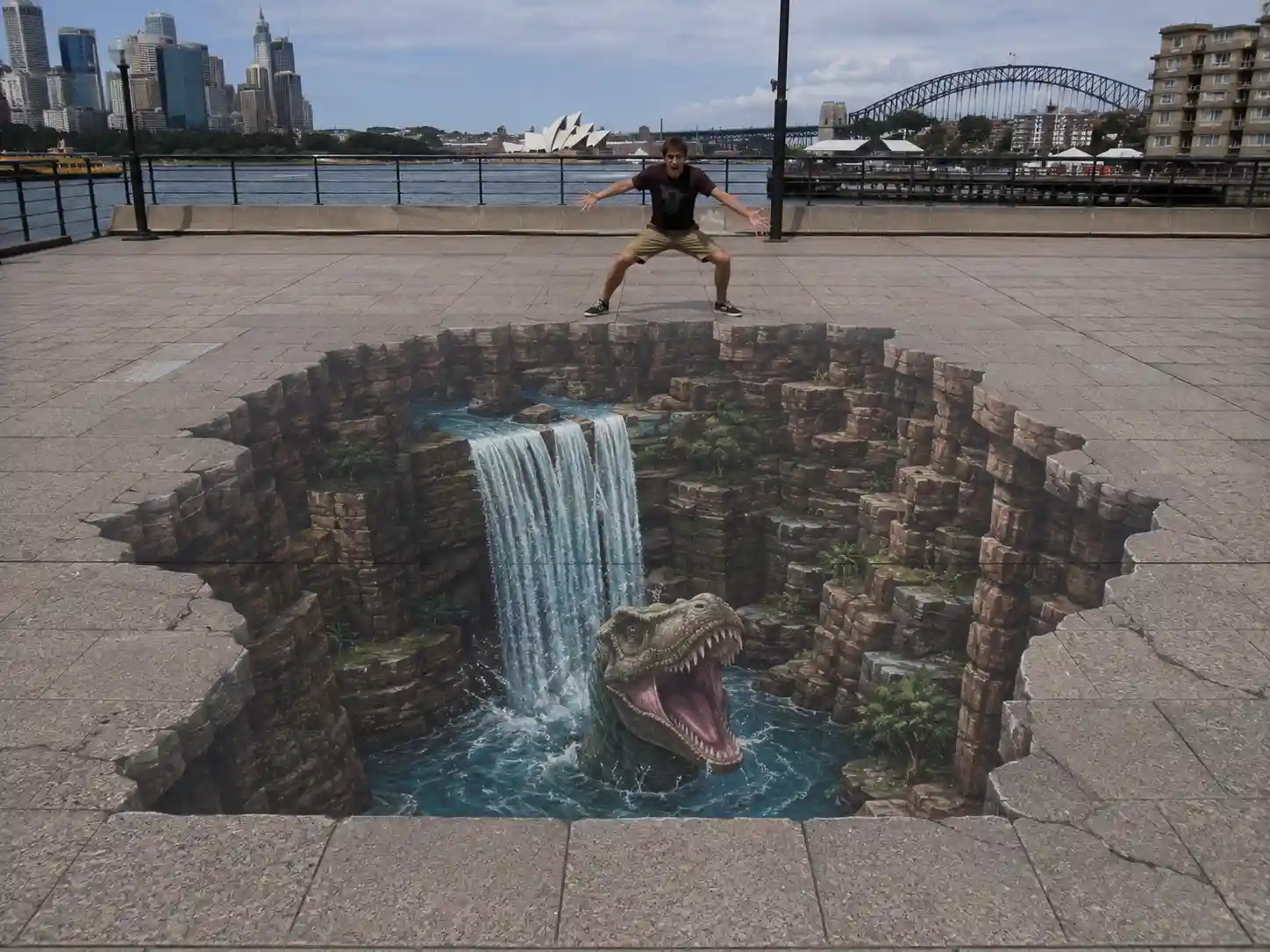
Anamorphic Chalk and Street Art Illusions
Street and chalk paintings drawn as heavily stretched, warped shapes that only resolve into a convincing 3D scene when viewed from one specific, carefully calculated angle.
 Cognitive
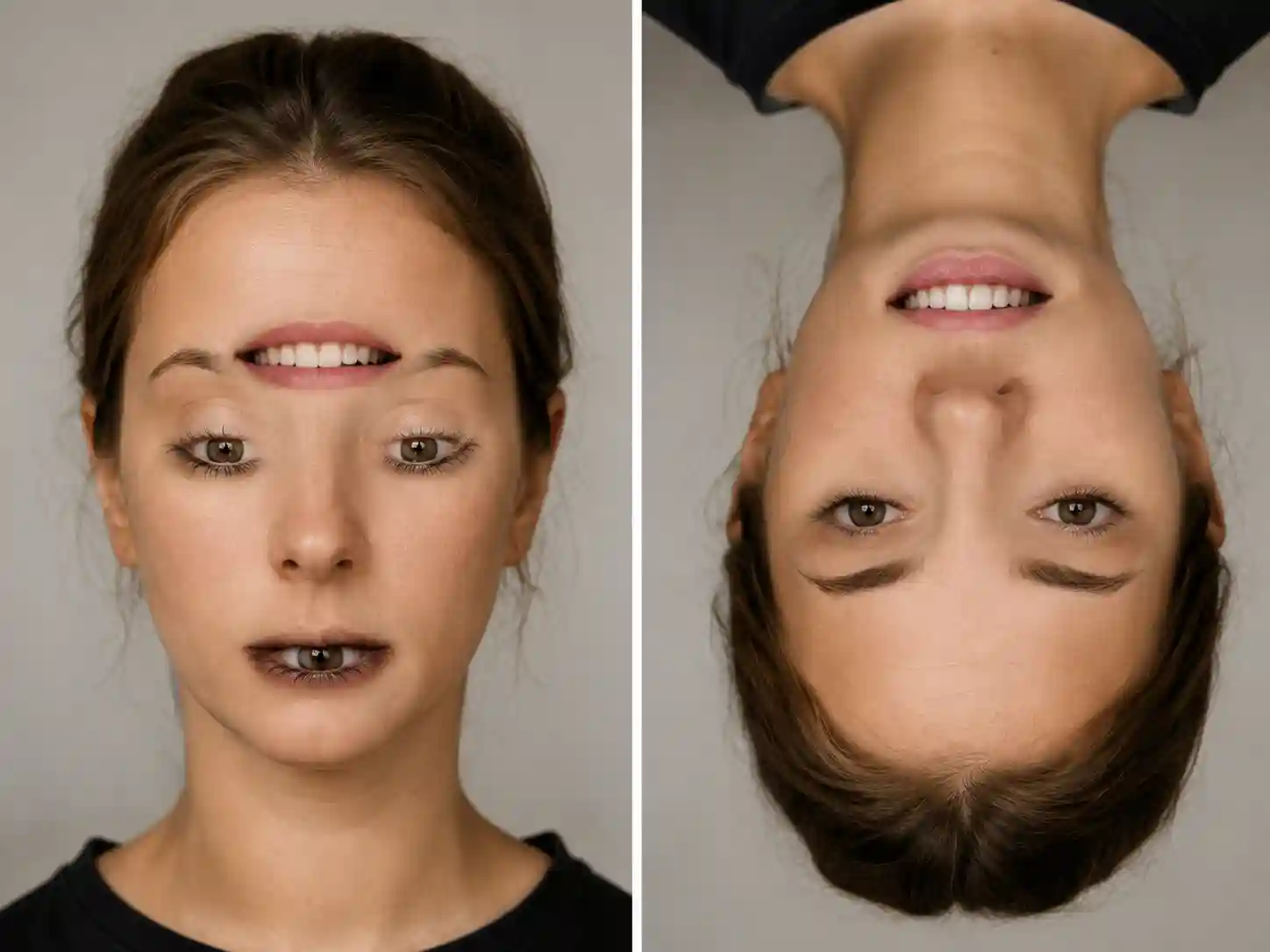
Thatcher Effect (Upside-Down Face Illusion)
Flip a photo of a face upside down after crudely inverting the eyes and mouth, and the distortion becomes almost invisible - proof that upright face recognition runs on rules that flip off along with the picture.
 Size & Perspective
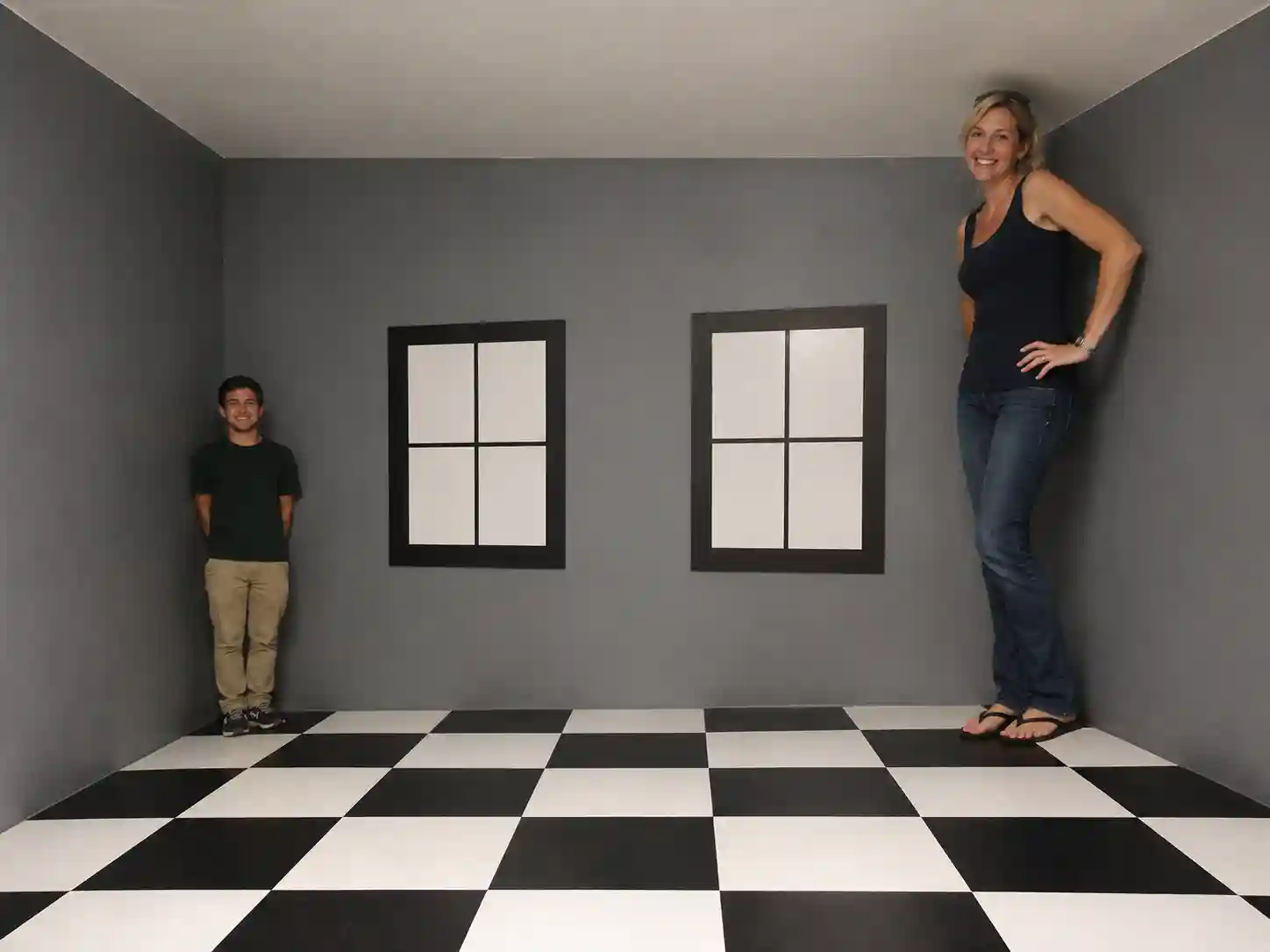
Ames Room Illusion
A distorted, trapezoidal room that looks perfectly rectangular from one exact viewing point, making people standing in opposite corners appear to shrink or grow to impossible sizes.