 Optical Wonderful
Anamorphic Chalk and Street Art Illusions
Street and chalk paintings drawn as heavily stretched, warped shapes that only resolve into a convincing 3D scene when viewed from one specific, carefully calculated angle.
What you're seeing
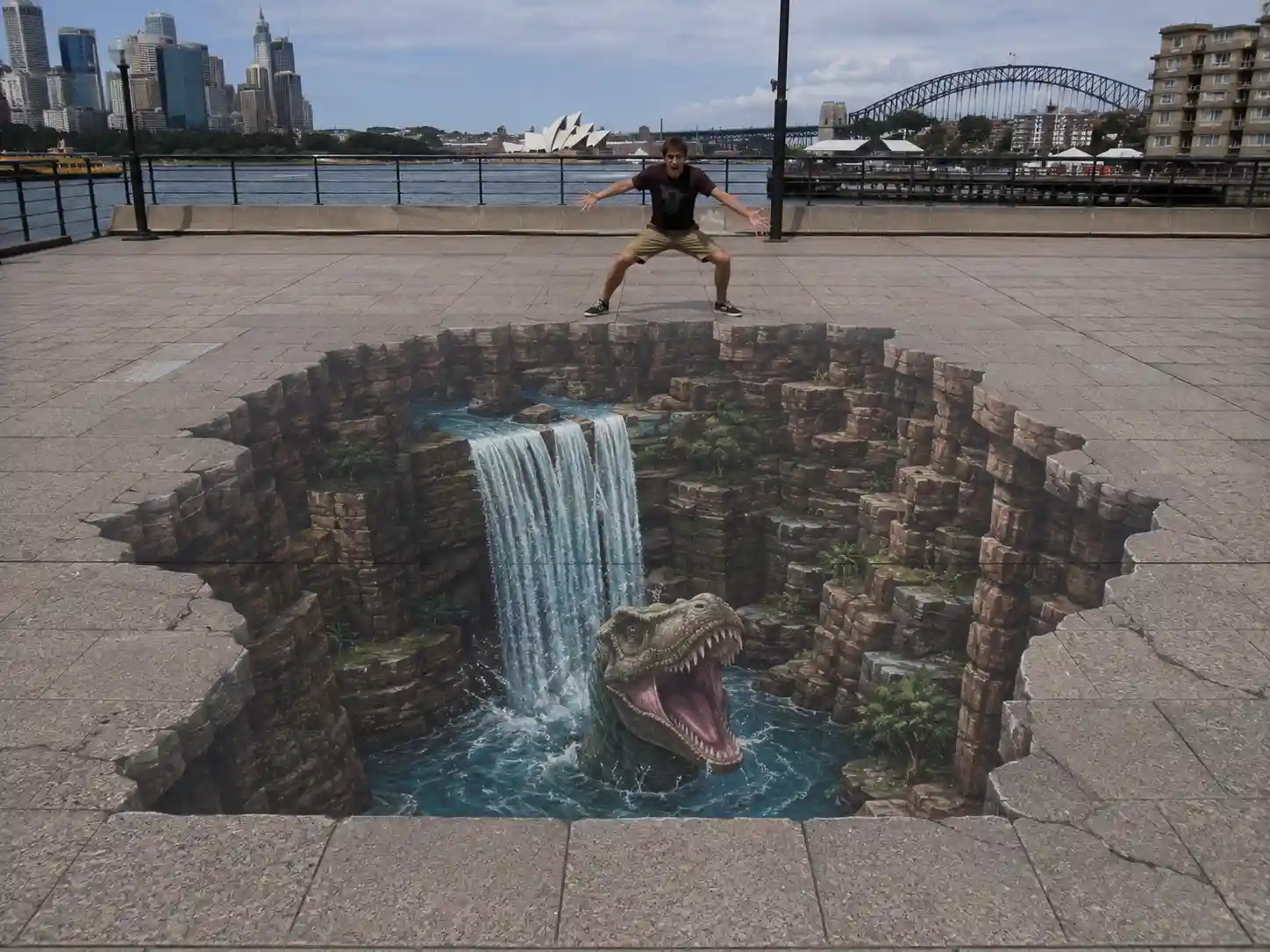
A painting on flat pavement shows what looks like a deep chasm, a swimming pool, or a collapsing sinkhole, complete with convincing shadows, water reflections, and rubble that seems to drop away below the surface of the street. Walk around it and the illusion falls apart almost completely - from most angles the image reads as an elongated, distorted smear of color with proportions that make no visual sense at all. But stand at one specific spot, usually marked for you, and look through a camera or with one eye closed, and the distorted shapes snap into a coherent, convincingly three-dimensional scene.
This is anamorphosis: art that's deliberately drawn "wrong," stretched and skewed according to the mathematics of perspective, so that it only looks "right" when viewed from the one vantage point the distortion was calculated for. Every anamorphic street painting is really two things simultaneously - a wildly distorted 2D pattern on the ground, and a geometrically correct-looking scene, with the second only becoming visible once your eye is positioned at the exact point the artist worked backward from.
Why it happens
Ordinary perspective drawing already involves distortion: artists routinely stretch and compress shapes to make a 3D scene look correct when viewed from a typical, roughly head-on vantage point. Anamorphic art pushes that same logic to an extreme, calculating exactly how a flat scene needs to be stretched so that it reconstructs correctly from one sharply oblique viewing angle instead of a head-on one. The math is the same perspective projection your visual system uses to interpret ordinary photographs and paintings; the anamorphic artist has simply solved it backward, starting from the desired final appearance and working out what shape needs to be on the ground to produce it from that one specific eye position.
Once your eye (or a camera lens) is at the calculated spot, your visual system does exactly what it always does: it interprets the incoming pattern of light using the same depth cues it relies on for every scene - converging lines, relative size, occlusion, cast shadows, and the assumption that a coherent scene, once formed, is more likely to be "real" than a coincidence. The illusion isn't fighting your visual system at all; it's cooperating with it completely, supplying every cue your brain expects from a real 3D scene, just via paint calculated to project correctly from one very particular point rather than via actual depth.
Why the angle matters so much
Move even a modest distance from the sweet spot and the illusion degrades quickly, because the entire effect depends on the projected image lining up with your eye's specific viewing geometry. This is different from most illusions in this library, which typically work about the same regardless of your exact position or distance - the café wall illusion doesn't care much where you're standing, but an anamorphic pavement painting cares enormously, which is why professional anamorphic artists typically mark or rope off the one viewing spot, and why nearly all photographs of this kind of work are taken from a tripod set up at that exact calculated position.
A long lineage, a modern boom
Anamorphic technique isn't new - Renaissance and Baroque artists experimented with stretched, angle-dependent imagery for centuries, most famously the distorted skull hidden in the foreground of Hans Holbein the Younger's 1533 painting The Ambassadors, which only resolves into a recognizable skull when viewed from a sharp angle to one side of the canvas. What's changed in recent decades is scale, accessibility, and audience: street and chalk artists working in the 2000s and 2010s, using the same underlying calculations, popularized giant temporary pavement illusions - sinkholes, waterfalls, collapsing floors - designed explicitly to be photographed and shared, turning a centuries-old painterly trick into a recurring feature of public art festivals and social media.
Related reading
Anamorphic art shares its reliance on a single fixed viewpoint with the hollow face illusion, and it sits in the same broader category of manufactured depth as autostereograms and chromostereopsis, even though each produces its sense of depth through a completely different mechanism.
Read the science behind why this happens →
Related illusions
 Depth
Depth
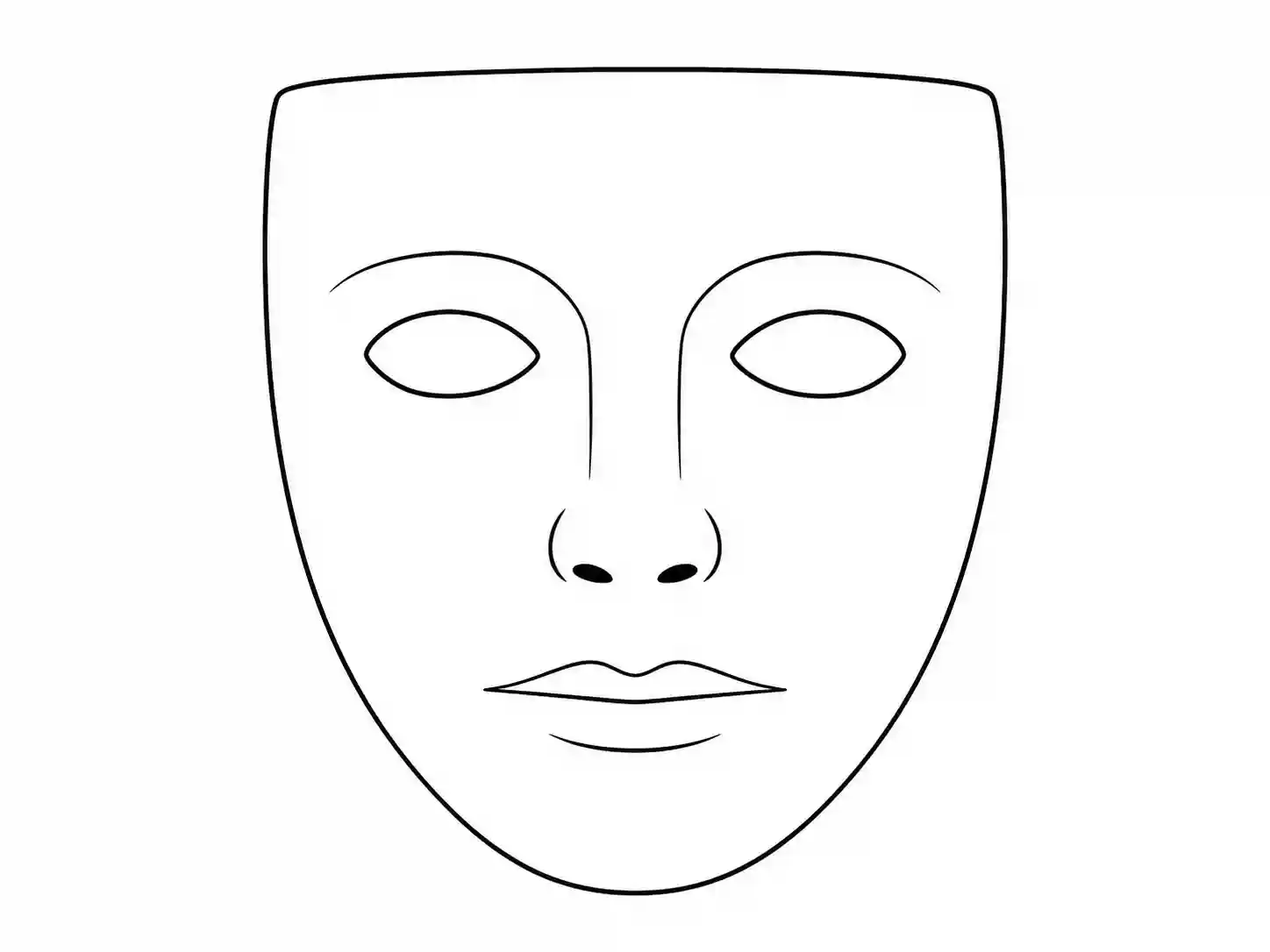
Hollow Face Illusion
A mask or model of a face, viewed from the concave (inside-out) side, still appears to bulge outward as a normal convex face - and even seems to turn and follow you as you move.
 Depth
Depth
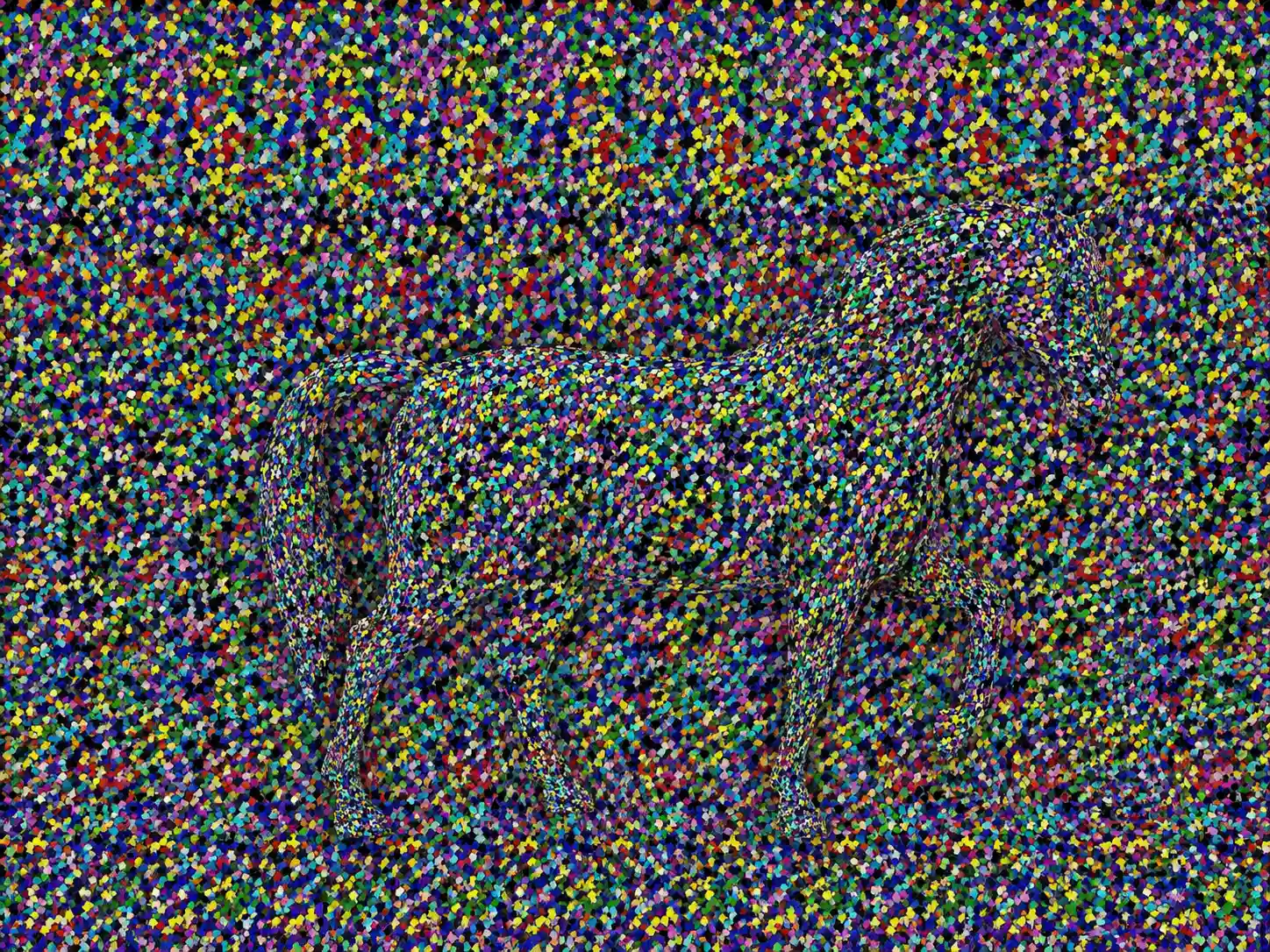
Autostereograms ("Magic Eye" Images)
A flat pattern of repeating texture that, viewed with deliberately unfocused or crossed eyes, suddenly resolves into a hidden 3D shape floating above or below the page.
 Depth
Depth
Chromostereopsis (Color Depth Illusion)
Flat patches of saturated red and blue, printed at the exact same distance from your eye, can appear to float at different depths purely because of how your eye focuses different wavelengths of light.